Deploy Metabase
Metabase is an easy, open-source way to derive insights from data:
- Let anyone on your team ask questions without knowing SQL.
- Rich beautiful dashboards with auto refresh and fullscreen.
- SQL Mode for analysts and data pros.
- Create canonical segments and metrics for your team to use.
- Subscribe to reports with Slack or email.
- Humanize data for your team by renaming, annotating and hiding fields.
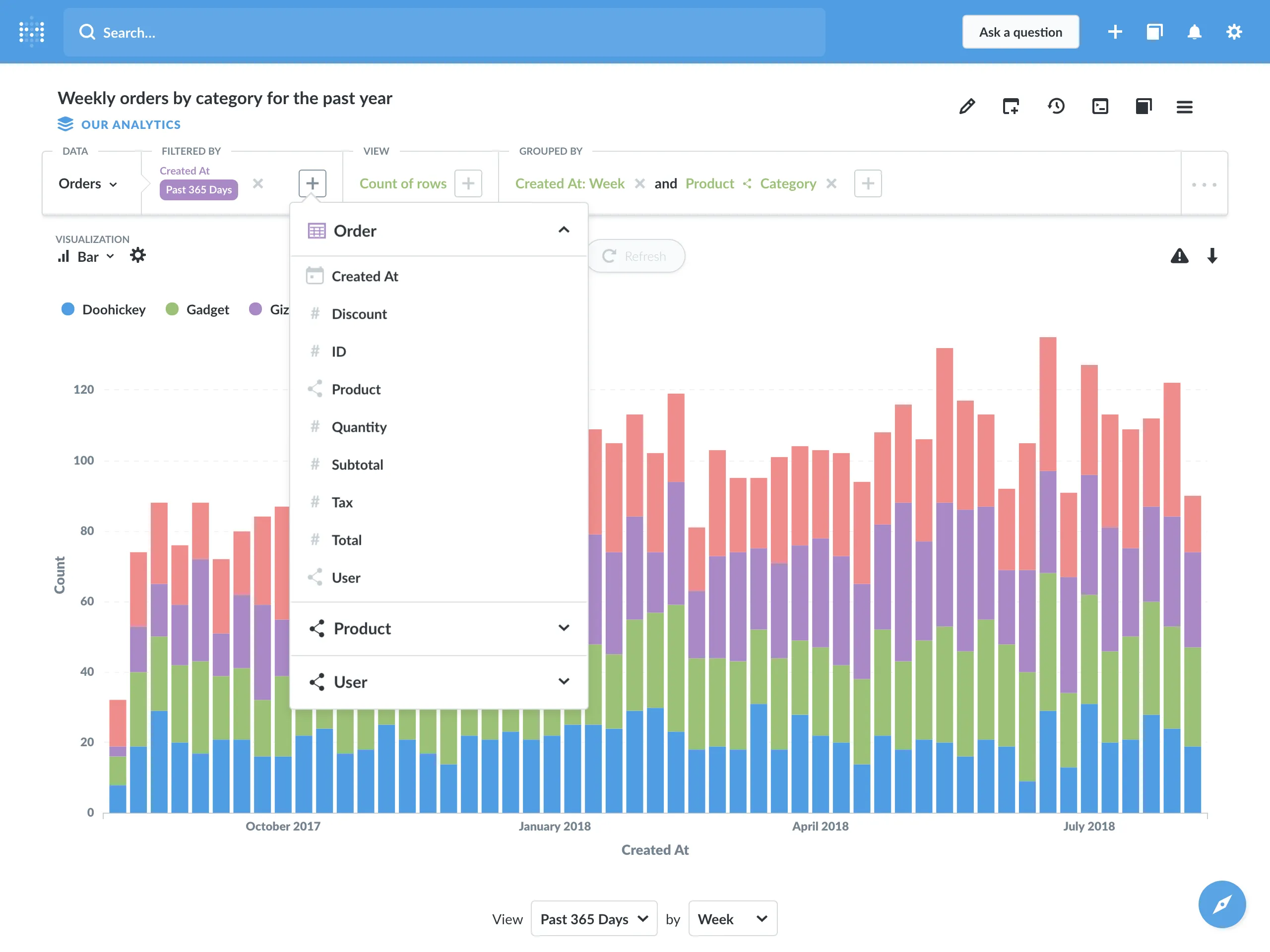
You can deploy Metabase on Render in under 5 minutes. It is backed by Render's fully managed PostgreSQL and can be used to gain insights from any supported database including PostgreSQL, MySQL, Google Analytics, and MongoDB.
One-Click Deploy
Click Deploy to Render below and follow the prompts to deploy Metabase on Render.
Manual Deploy
-
Create a new PostgreSQL database on Render and copy the internal DB URL to use below. This is the database where Metabase stores its own data. You will configure a connection to your application database in Metabase after installation.
-
Fork render-examples/metabase on GitHub.
-
Create a new Web Service on Render, and give Render permission to access your new repo.
-
Select
Dockerfor the runtime, and add the following environment variable under the Advanced section:Key Value MB_DB_CONNECTION_URIThe internal database URL for the database you created above. You can optionally encrypt your Metabase database connection details by adding the
MB_ENCRYPTION_SECRET_KEYenvironment variable as described in the Metabase operations guide. -
We recommend selecting a web service compute plan with at least 1 GB of RAM for Metabase. If you have more than a small amount of test data, we recommend at least 2 GB of RAM.
That's it! Metabase will be live on your Render URL as soon as the Docker build finishes.
Next, create a Metabase admin account and connect to your database using the Metabase Setup Guide. Soon everyone in your team will be uncovering data insights with your shiny Metabase instance on Render! 🙌
Upgrading Metabase
When you first install Metabase, Render will use the latest stable version in the Dockerfile:
To upgrade, simply trigger a manual deploy for Metabase in your Render Dashboard.
You can also use a specific version of Metabase in your Dockerfile:
Commit and push your changes and Render will automatically upgrade and deploy your Metabase instance.