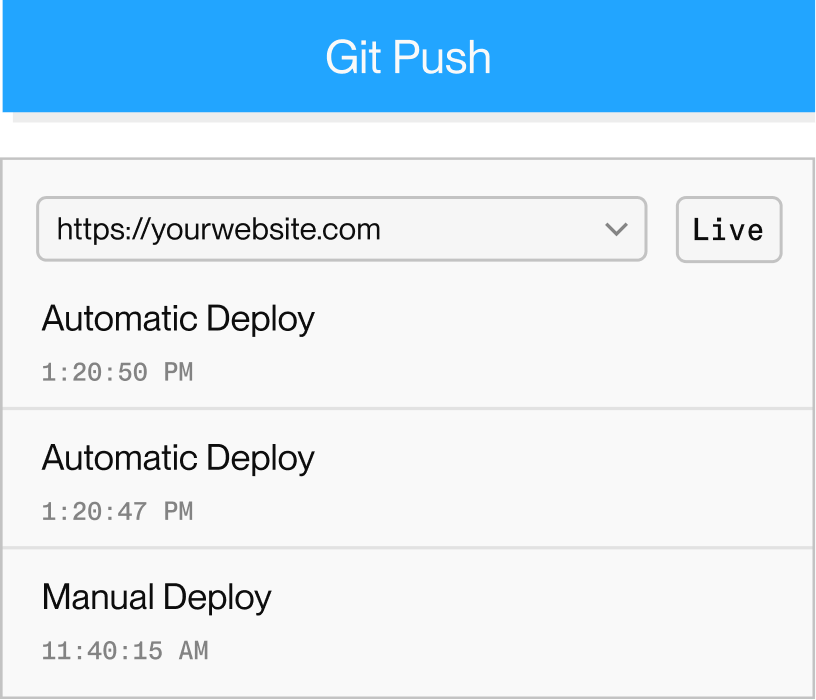
Try a Django app or API on a free web service. Use your onrender.com URL or connect your own domain, with managed TLS. No credit card required.
Each instance has a fixed monthly price, prorated by the second. Web services, databases, workers, storage, and usage beyond included allowances are billed separately.
Capability | Render | |||
|---|---|---|---|---|
How Django runs | Long-running web service with native Python or Docker | Long-running service built from source or Docker | Python app on web dynos | Fly Machine built from a Dockerfile |
Free tier | 750 free hours/month. Spins down after 15 min idle | $5 trial for 30 days, then $1/month credit | None. Eco: $5/month for 1,000 hours | No free tier. Personal bills under $5 waived |
Always-on, 2 GB | $25/month (1 CPU) | Up to $40/month at full use (1 vCPU) | $250/month (Performance-M, 2.5 GB dedicated) | $13.39/month shared CPU, $33 dedicated |
Managed Postgres and Redis | Postgres from $6 with PITR, plus Key Value | Maintained databases. HA and Postgres PITR opt-in | Postgres and Key-Value. No rollback on Essential | Managed Postgres from $38, HA included. Upstash Redis |
Celery workers and cron | Workers and cron jobs | Workers and cron jobs | Worker dynos and Scheduler | Process groups. Cron via Supercronic |
Migrations before deploy | Pre-deploy command on paid instances | Pre-deploy command | Release phase | release_command in fly.toml |
WebSockets | Yes, no maximum duration | Yes, no maximum duration | Yes, closes after 55s idle | Yes, through Fly Proxy |
Competitor details as of November 2026. Instance prices are compute only. Fly.io prices are for US East.
Run your web service, database, and workers from one render.yaml Blueprint. You maintain Django settings, dependencies, and migrations.
Configure an HTTP health check so Render can verify your app before routing traffic to a new version. Services without persistent disks support zero-downtime deploys.
Connect Django to Postgres and Key Value using internal URLs in the same workspace and region. Environment isolation controls can restrict those connections.
Store your application's relational data in Render Postgres. Paid databases include point-in-time recovery, with a recovery window determined by your workspace plan.
Offload emails, reports, and other slow tasks to a dedicated worker. Use paid, persistent Render Key Value as a Redis-compatible broker, with noeviction for queues.
Run periodic Django commands as Render cron jobs. Set the schedule, share the required environment variables, and use a command that exits when its work is done.
Choose larger instances or add instances as load grows. Pro workspaces and higher support CPU- or memory-based autoscaling for services without persistent disks.
Create a Postgres database, then connect your GitHub, GitLab, or Bitbucket repo to a new Python web service in the same region and workspace.
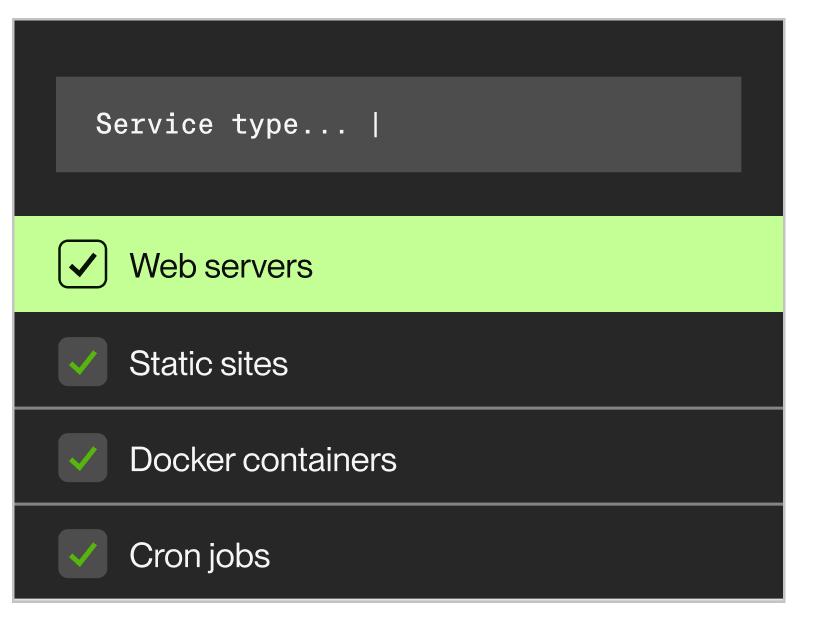
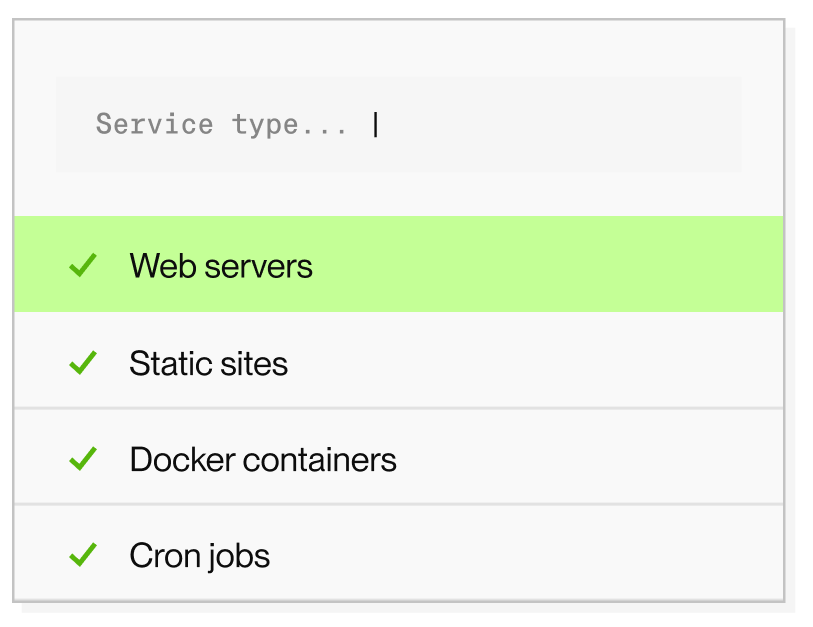
Set your build script and production WSGI or ASGI start command. Add DATABASE_URL and SECRET_KEY, configure allowed hosts, and set up static-file collection and migrations.


Render builds your app and publishes its URL. Every later commit to your branch deploys automatically, or only after CI checks pass.