Migrating production infrastructure? Get up to $10K in migration credits.
Apply nowHow agentic development led a lifelong Heroku customer to Render


Matt Pelc has been building software since before most modern cloud platforms existed. He has spent two decades developing strong opinions about infrastructure. Chief among them: the best infrastructure is the kind you stop thinking about. As CEO of Plane, a global payroll, HR, and compliance platform where AI agents and humans collaborate to automate the work that used to live in spreadsheets and UI clicks, that philosophy shapes everything.
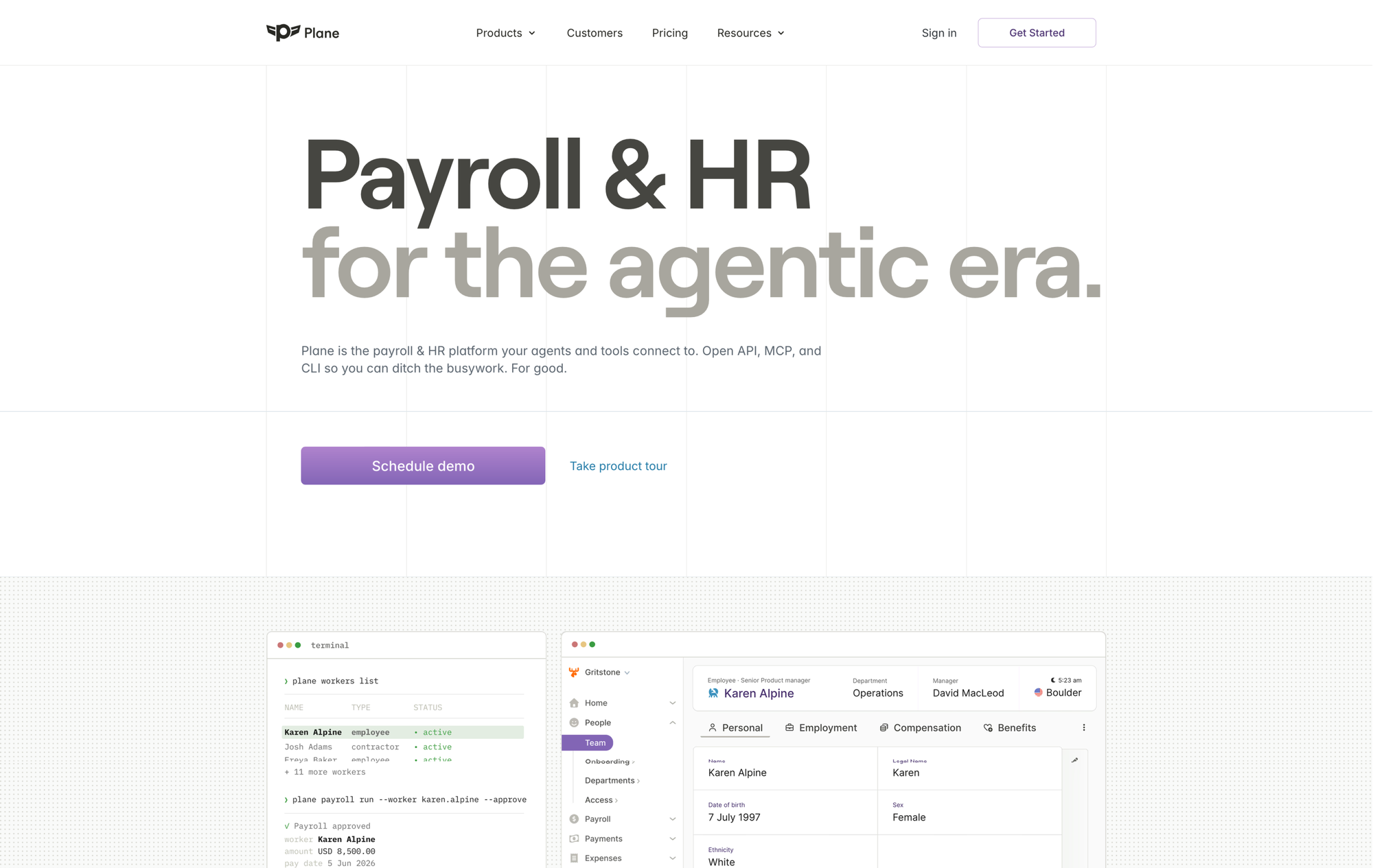
Plane is building what Pelc describes as an "AI-first and agent-first" platform. The goal is simple: give founders and people teams fully automated payroll and HR tools to run their companies. Plane’s engineering team builds with the same philosophy. Close to 95% of the company's code is AI-written today and the infrastructure underneath has to keep pace.
For most of the company's life, that meant Heroku. But agentic development changed their architecture, and their architecture outgrew Heroku. When it came time to find a new home, Render was the only platform that felt like a true successor.
Two decades of building the right way
Pelc's relationship with Heroku predates Plane itself. He started using the platform around 2008 and never had a reason to leave. By the time Plane launched, it was the obvious choice.
Pelc follows the developer tools landscape closely. He wasn't shopping for alternatives out of dissatisfaction. When a specific technical need forced the question, he ruled them out by category, the way someone does after paying close attention for two decades. A team moving a terabyte of data across eight production databases doesn't walk away from a platform lightly.
The world changed. Heroku didn't.
Pelc is careful to give Heroku its credit. "I wanted stability from my platform. Heroku delivered that. Infrastructure changing all the time just creates risk." But he acknowledges that modern software teams now have "an entire new constituency of agents" to optimize for.
For Plane, that meant rethinking how their codebase was structured. Agents need full context about the system they are working on. That meant a monorepo. And beyond monorepo support, they needed a platform built around infrastructure-as-code, private networking, auto-deploy after CI, and organized environments across multiple services. Heroku wasn't built for any of it.
It wasn't about cost or incidents. The way Plane built software had moved on. Their infrastructure needed to as well.

The spiritual successor
Once the decision to move was made, the question became: where?
Pelc's evaluation was instinctive but grounded in two decades of pattern recognition. Vercel was out immediately. Plane runs on Rails, not the Node-based frontend frameworks Vercel is built around. Railway and Fly had interesting technology, but felt optimized for smaller projects. "I got the vibe that they were less mature, more optimized for small side projects than for running more serious infrastructure," Pelc says. "None of these other options seemed quite as mature as Render."
"To me, Render is sort of the spiritual successor to Heroku," Pelc says. The evaluation was not a feature by feature comparison. Render needed to replicate the experience Plane had spent years building muscle memory around, while keeping pace with how modern teams actually build software.
A migration done right
Plane started conversations with Render in October 2025 and began migrating in earnest in January 2026. The approach was staged and deliberate. Compute moved first, one service at a time, validated before the next cut over. Blueprints made the infrastructure-as-code lift straightforward.
The database migration was the heaviest lift. Roughly a terabyte of data across eight Postgres databases, executed across weekend sessions to minimize risk to a live payroll platform. "Your team was very helpful in getting those databases replicated from Heroku," Pelc says. “From the initial architecture review to the database cut-overs, it felt like Render's team was in it with us.”
By the end of April 2026, Plane had fully spun down its Heroku account.
The right foundation for an agent-first future
Agents now have full context about the system they are working on, deployable across Render’s multi-service infrastructure from a single monorepo. Code ships faster because the architecture that enables agentic development is finally in place. With Render, Plane could manage infrastructure declaratively through blueprints and infrastructure-as-code in a way it had not on Heroku.
Plane is moving fast. Agents on the platform, both human and AI, are using Plane to automate the work that used to require clicking through HR dashboards and chasing down approvals. The roadmap points toward deeper API, CLI, and MCP integration, with the goal of giving founders and people teams more automated, programmable ways to run their companies. The infrastructure underneath all of it needs to keep up. Render does.
For other teams still on Heroku weighing a similar decision, Pelc's advice is direct: "Render is just as good as Heroku. If you're used to Heroku, you'll pick it up quickly. I would encourage people not to be afraid to move off of Heroku.”

