The fourth speaker at localhost was Sam Bhagwat, founder of Mastra, the open source TypeScript agent framework. His talk carried its own thesis right in the title: every harness will become a claw.
Welcome to the harness era
Last year, most of the conversation around agents was about drawing a line between an agent and a plain LLM call: an agent runs in a loop, makes tool calls, produces structured output, the self-driving-car analogy. That goalpost has moved. It's June 2026, and harness is the new agent. Claude Code, Codex, and OpenCode are all, in practice, harnesses: the scaffolding around agent behaviors that a single model call can't handle on its own.
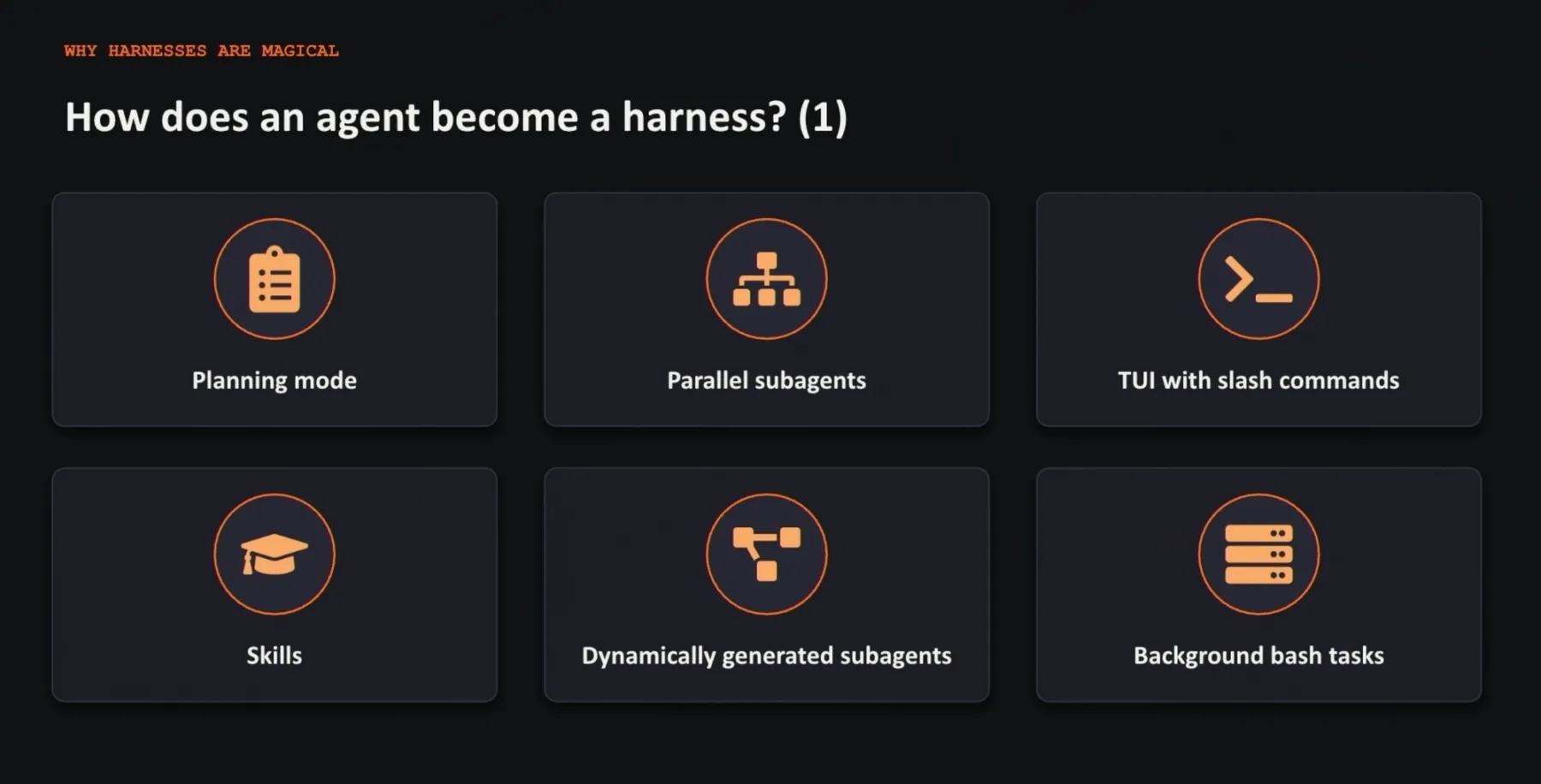
That list has a recognizable shape, even if nobody agrees on its exact edges. It includes:
- A planning mode
- Skills
- Parallel subagents that can browse the web or gather context, then get dynamically forked or merged back in
- Background tasks that run in something like Bash
- Built-in memory and context compaction, ideally done better than the compaction that frustrates many Claude Code users today
- Thread persistence, so a session can be resumed after being killed
- The ability to interrupt, queue, and steer work that's already in flight
- Fine-grained permissioning, like approving a command once or approving it for an entire session
Add enough of that around a loop, and the loop is still recognizable. The product wrapped around it keeps growing regardless:
Fundamentally, the nature of harnesses is that they expand.
From a side project to a shipped harness
Mastra reached this list by building one for itself. Back in November, around when Claude Code first shipped, one of Mastra's engineers got frustrated with how compaction worked in the tools he was using and started tinkering with Mastra's own observational memory system instead. What began as a side project turned into a local coding agent the rest of the team started using, then liked enough to ship as a product: Mastra Code, a local TUI comparable to Claude Code or Codex, with observational memory built in from the start. The team daily-drove it themselves.
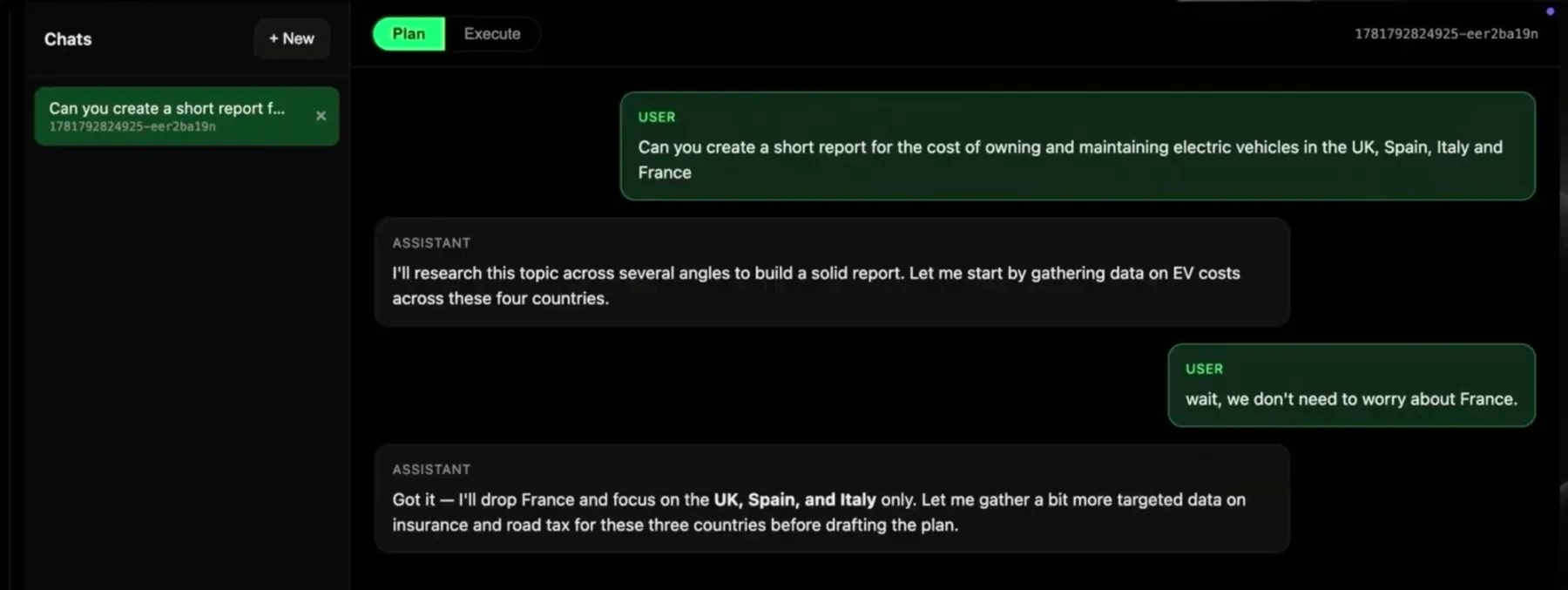
As they kept adding harness-shaped features (modes, subagents, and the rest of the list) directly into Mastra Code, a structural problem showed up: all of that capability was becoming permanently welded to one specific local coding agent. Anyone who wanted to build their own agent or their own harness didn't want it glued to that single tool. So those features got pulled back out into a standalone Harness class, the same day-to-day capabilities that had proven useful inside Mastra Code, now available to any Mastra user building their own agent.
From the outside, using that Harness looks like a plan proposed, approved with a yes, and a visible task list tracking the work as it happens, the same kind of interface people already recognize from Claude Code. None of that has to stay internal-only. It's just as useful surfaced directly to the people using a product built on top of it.
Every harness will become a claw
Harnesses don't hold still: once a team has one, they keep finding more capability they want out of it, because more capability makes it more valuable. Eventually that means putting the harness in a box of its own: always-on, the way tools like Devin are useful inside an org precisely because you can talk to them somewhere other than your own machine, whether that's Slack, Discord, Telegram, or plain text. A claw is a harness that lives in that box. It wakes up on its own when something happens, browses the web unprompted, and gets pinged the way you'd ping a person, the way a personal assistant agent that reads your email might text you the moment something urgent shows up.
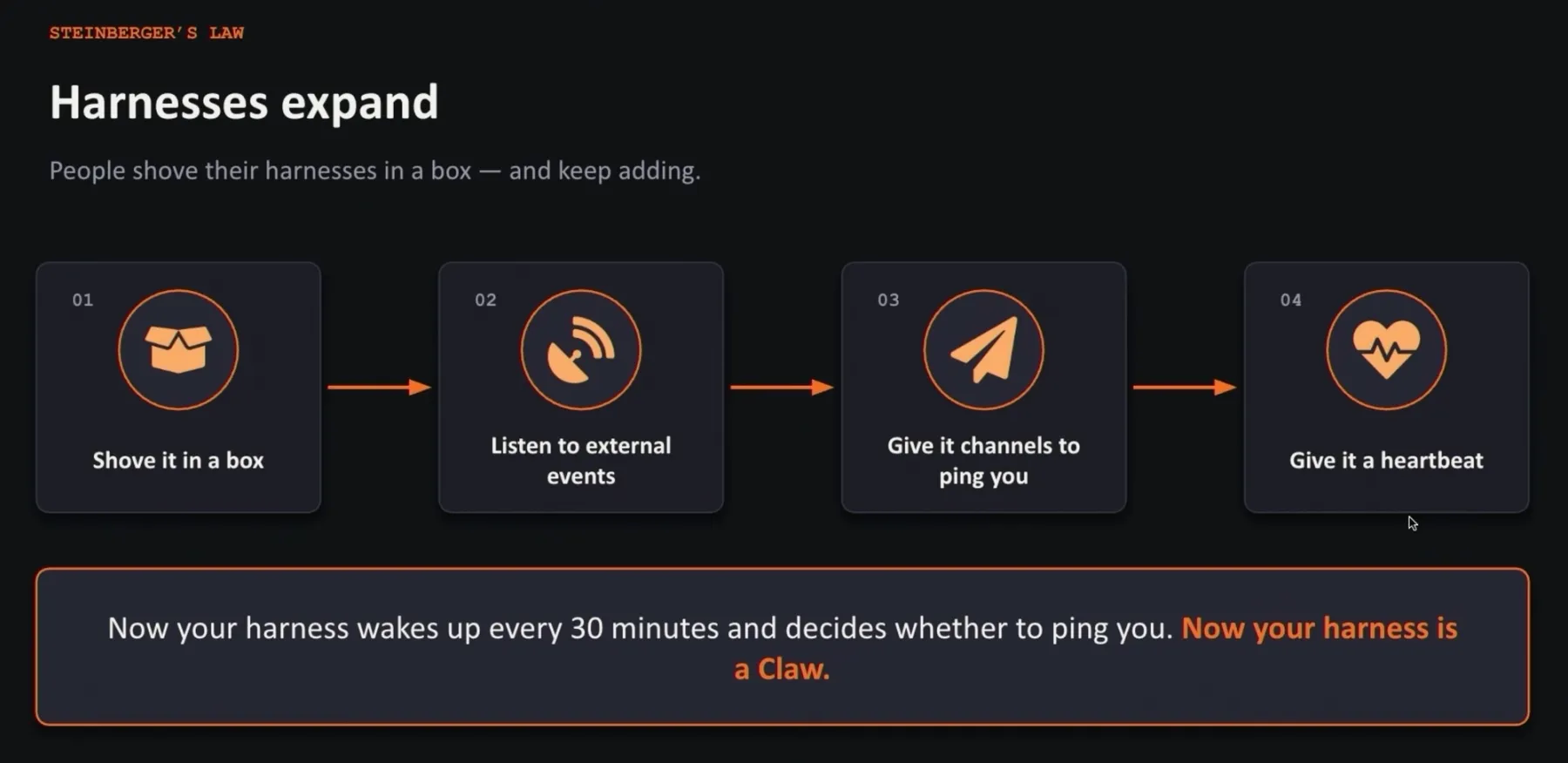
Slack-based and background coding agents, whether built internally or adopted off the shelf, are an early, live version of this shift already underway. As more coding agents end up living inside the same Slack workspace, the natural next step is teams running informal bake-offs between them, where the more pleasant one to work with simply wins out over the others. It's the same pattern as how people actually use their phones: dozens of apps installed, only a handful reached for in a given week, maybe five, maybe nine. Harnesses and claws end up in the same position, competing for a limited amount of a person's attention rather than for raw capability.
The dev server and the deploy preview
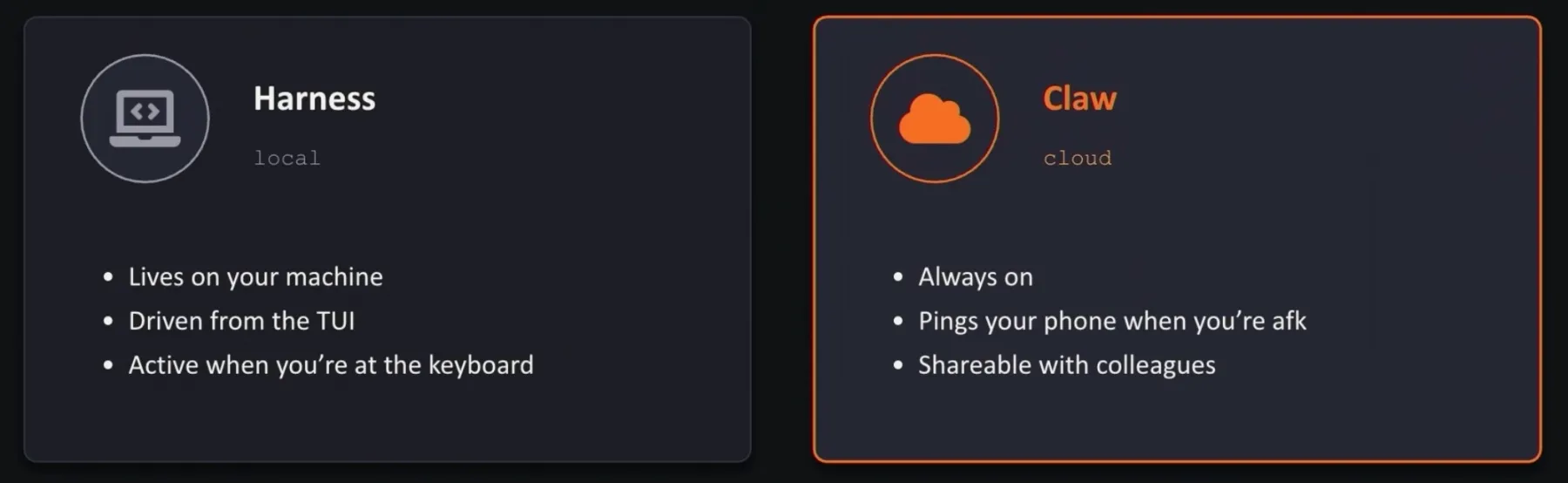
A local dev server and a Render deploy preview aren't two different things, they're two different versions of the same application. The same relationship holds between a local coding agent and a cloud-based claw: not a different product, just a different deployment of the same underlying loop.
The takeaway for anyone building an agent today isn't just what it does right now, but how it grows into a harness, and from there, into something that runs on its own and shows up wherever a team or its users actually are.