5 Best Railway Alternatives in 2026 for Reliability, Pricing, and Production Readiness
Most teams pick a platform when shipping speed is the only thing that matters. Railway has been one of the most common early answers for exactly that reason. Fast deploys, low friction, done.
The harder question comes later, when the app has users, the team has grown, and the platform you chose on day one starts shaping what you can do on day one hundred. This guide is for teams at that point, asking whether Railway is still the right call, and if not, which alternative is actually worth the migration cost.
TL;DR
-
Railway works well for prototypes and lightweight apps. Teams start looking for alternatives when pricing variability, request limits, reliability, or day-two operations start shaping architecture decisions.
-
Railway's reliability record has become a core reason teams are making that move.
-
Render is the best all-around Railway alternative for most production teams because it combines predictable instance pricing, managed Postgres, first-class workers, and threshold-based autoscaling in one platform.
-
Railway bills compute by usage at $20 per vCPU-month and $10 per GB-RAM-month at full utilization, while Render's Starter instance begins at $7 per month.
-
Railway has a 15-minute public HTTP limit, closing connections earlier if no data is transferred for 5 minutes. Render supports 100-minute HTTP responses.
-
The best fit depends on what you’re optimizing for. Render is ideal for balanced production hosting, Fly.io for global distribution, DigitalOcean App Platform for ecosystem consolidation, Northflank for BYOC and platform control, and Heroku for continuity.
Why do teams look for Railway alternatives?
Most Railway migrations in 2026 come down to one or more of these:
-
How predictable the monthly bill is
-
How long requests can run before the platform becomes the constraint
-
How cleanly the platform separates web services from background work
-
How managed the database experience really is
-
How scaling behaves under spiky traffic
-
How much governance your team needs as it grows
-
How well the platform's incident history holds up against your production SLA
If none of those are painful right now, staying on Railway could be the right call. If two or more keep coming up, that is when the migration cost starts to make sense.
Railway's reliability record
Reliability is one of the most common reasons teams move off Railway. Between November 2025 and May 2026, Railway published five major postmortems. They ranged from stalled deploys and a caching misconfiguration that served authenticated user data to the wrong users, to a full-platform outage of roughly 8 hours after Google Cloud suspended Railway's production account.
Third-party tracker IsDown sees the same pattern, logging more than 500 incidents since March 2022 and dozens more in recent 90-day windows.
Railway's postmortems are thorough and transparent, which is worth acknowledging. Even so, if an outage affects your users, the write-up afterward doesn't offset the impact — frequency and severity are what's worth weighing. Read the incident history yourself before committing production workloads, for Railway or any platform on this list.
What to evaluate in a Railway alternative
1. Platform reliability
Review a platform's public incident history before committing production workloads. Frequency, severity, architectural cause, and resolution time tell you more than an uptime percentage. Honest postmortems are a good sign. A recurring architectural pattern across multiple incidents is a separate concern from any individual outage.
2. Pricing predictability
The choice is between metered usage across CPU, memory, storage, and egress, or an instance size where you know roughly what the service itself costs every month.
3. Request handling
If your app serves long-running exports, AI inference, report generation, or synchronous data jobs, request limits shape your application design. They are worth checking before you commit.
4. Background workers
If you rely on queues, event consumers, scheduled jobs, or async processing, first-class worker support reduces friction fast.
5. Database experience
Look past the phrase "managed Postgres." Read replicas, recovery windows, extension support, and day-two operations matter more than the label.
6. Scaling model
The relevant question is how a platform scales and how much manual intervention it takes when traffic changes.
7. Team controls
As your team grows, RBAC, audit logs, SSO, environment isolation, and deployment controls become part of the platform decision and no longer feel optional.
5 best Railway alternatives in 2026
Platform | Best for | Pricing style | Operational model | Why teams choose it over Railway |
|---|---|---|---|---|
General production hosting | Fixed instance pricing | Managed PaaS | Predictable pricing, managed Postgres, first-class workers, autoscaling | |
Low-latency global apps | Usage-based | Hands-on runtime | Region placement and global distribution | |
Existing DigitalOcean users | Instance-based | Managed app platform | Simpler consolidation with the wider DO stack | |
BYOC and internal platform teams | Usage-based | Configurable platform layer | More control over where and how workloads run | |
Legacy continuity | Paid dynos and add-ons | Mature PaaS | Familiar workflow and large add-on ecosystem |
1. Render
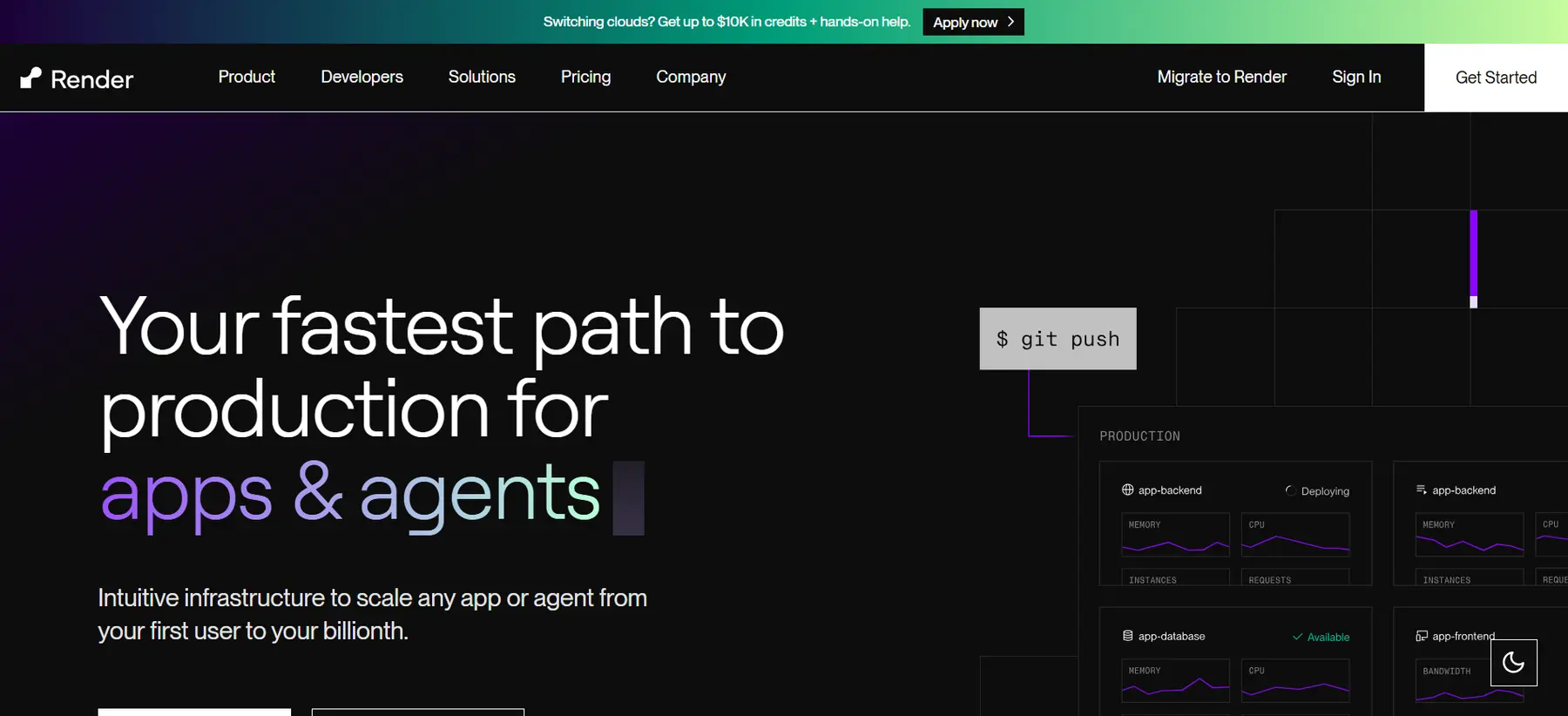
Render is the best Railway alternative for most production teams. The pitch is a stronger default without taking on much more infrastructure complexity.
Railway meters compute and memory over time. Render lets you choose an instance type at a predictable monthly rate, with compute prorated by the second if you scale up or down during the month. For teams running always-on APIs, workers, and databases, it’s usually easier to reason about.
For always-on services, the difference is clear:
Always-on resources | Render | Railway at full utilization |
|---|---|---|
0.5 vCPU/512 MB | Starter web service: $7/month | $15/month |
1 vCPU/2 GB | Standard web service: $25/month | $40/month |
Those Railway figures use its current rates of $20 per vCPU-month and $10 per GB-RAM-month at full utilization, before egress.
Render also raises the baseline across the rest of the stack:
-
Web services supporting 100-minute HTTP responses
-
Background workers as a first-class service type
-
Cron jobs for scheduled tasks
-
Managed Postgres with point-in-time recovery on paid plans
-
Read replicas for eligible Postgres instances
-
PostgreSQL extensions, including
pgvector -
Threshold-based autoscaling on CPU and memory targets, available on Pro workspaces and above
-
A single Blueprint file for defining services, workers, cron jobs, and databases together
Render tends to be the cleaner fit when the monthly bill needs to be more forecastable, long-running requests are pushing against Railway's HTTP limits, or web and async workloads need to run as separate service types. It’s also worth considering if you want a more managed Postgres experience or autoscaling based on explicit utilization targets rather than manual replica changes.
The difference shows up clearly when teams actually make the switch. Every, the AI-native productivity company, moved from Railway to Render. In their words, "We've gone from having 3 or 4 issues every week to really not having to think about infrastructure at all."
Choose Render if you want the most complete production setup with the least extra operational burden.
If that matches where you are right now, the next practical step is the Railway-to-Render migration guide.
2. Fly.io
Fly.io is a strong option when global distribution is the primary reason you’re leaving Railway.
You can run workloads closer to users across multiple regions and shape deployment topology more directly. That makes Fly.io attractive for latency-sensitive apps, real-time systems, and workloads where region placement is not optional.
It gives you more regional flexibility than Railway, but it’s less of a managed application platform and more of a globally distributed runtime you operate yourself. That means more decisions around placement, state, failover, networking, and operations.
Choose Fly.io if global distribution matters more than platform simplicity.
3. DigitalOcean App Platform
DigitalOcean App Platform is most compelling for teams already invested in the broader DigitalOcean ecosystem.
If you already use DigitalOcean for databases, object storage, or virtual machines, App Platform can reduce tooling sprawl and keep more of your infrastructure and billing in one place. It also supports worker components, which makes it a more complete option than comparison pages sometimes suggest.
The draw here is consolidation. It offers a more straightforward path than Railway if you want a stable managed platform with the rest of your infrastructure nearby.
If reliability history is the main reason you’re leaving Railway, DigitalOcean App Platform is not the strongest answer for that specific problem.
DigitalOcean App Platform makes the most sense if staying consolidated in the DO ecosystem matters more to you than getting the most full-featured platform.
4. Northflank
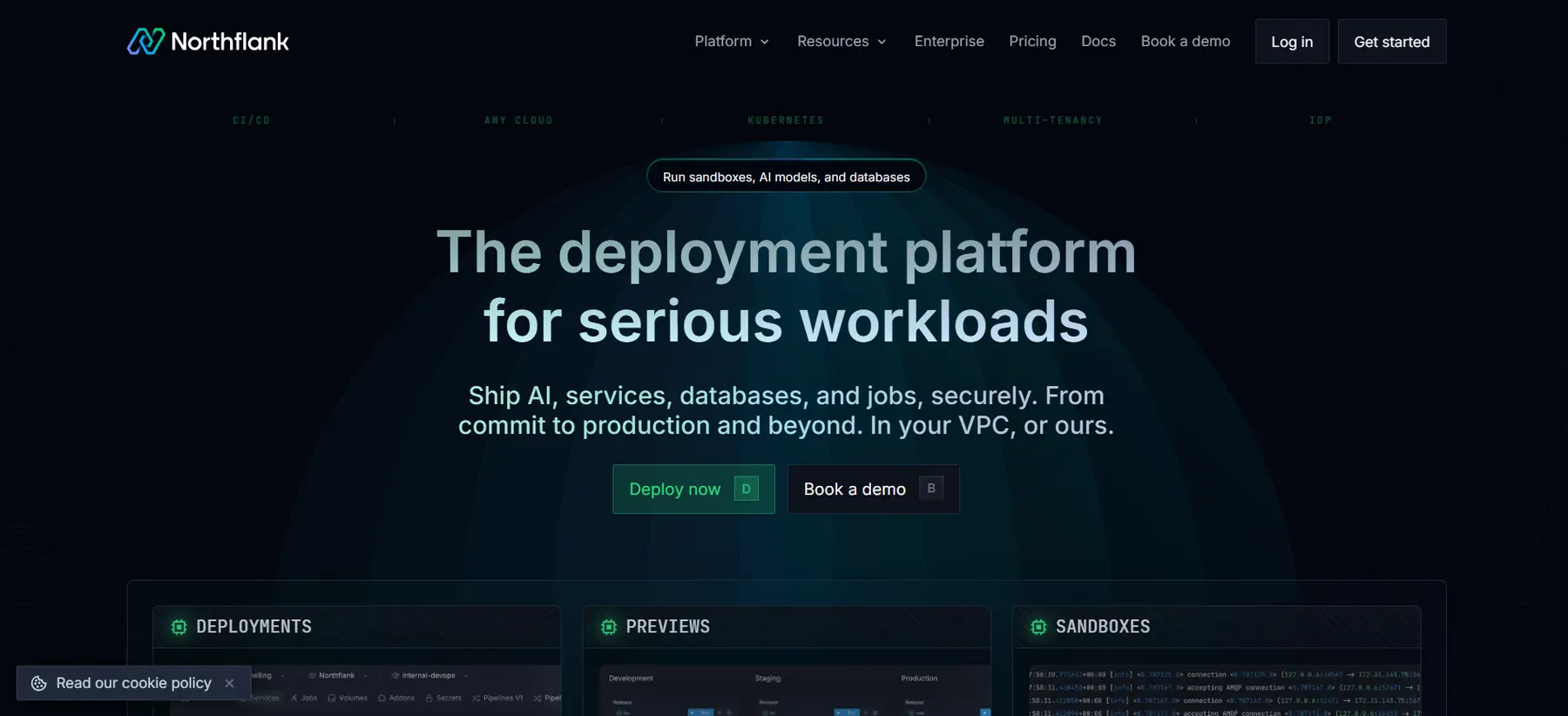
Northflank is a strong Railway alternative for teams that care about platform control, especially in bring-your-own-cloud environments.
Northflank is less about the simplest managed default and more about giving teams a fuller platform layer with more control over deployment targets, environment structure, and enterprise posture.
That makes it attractive for teams with compliance, residency, procurement, or internal platform requirements that push beyond a conventional hosted PaaS. Northflank's BYOC model is a real differentiator here.
For some teams, that’s exactly the answer to Railway's reliability risk. Running your own cloud account means tighter control over where workloads live and how infrastructure is isolated.
That control comes at the cost of complexity. If your team doesn’t actually need BYOC or a platform-team-oriented architecture, the operational overhead may not be worth it.
Go for Northflank if BYOC, platform control, or internal platform requirements are leading your decision.
5. Heroku
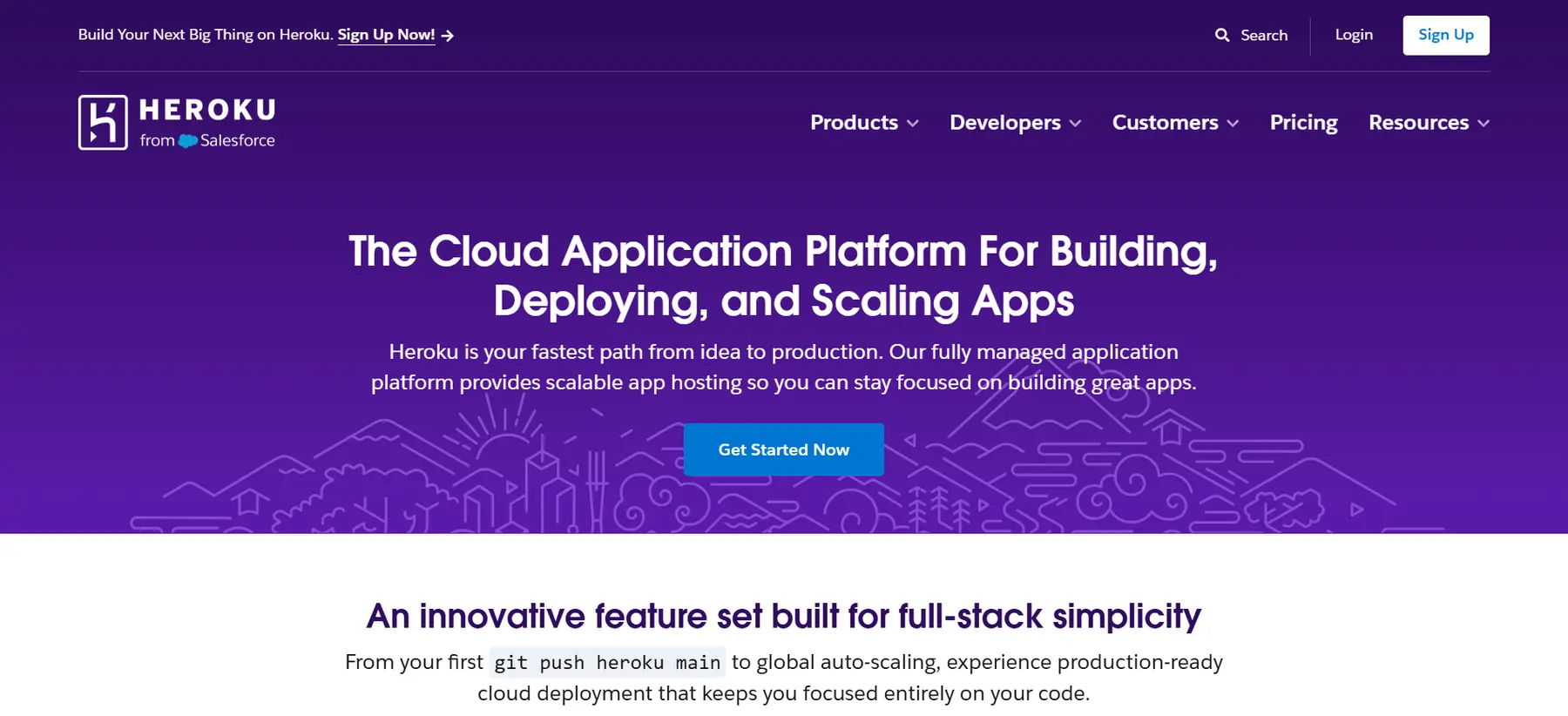
Heroku remains relevant for teams that already depend on its workflow, buildpacks, or add-on ecosystem.
The main reason to consider it is continuity. If you already have Heroku-heavy tooling or operational muscle memory, staying close to that model can reduce migration friction.
For new production workloads, though, Heroku is harder to recommend as the default Railway alternative. Its router has a 30-second request timeout, which is a meaningful architectural constraint for any app with long-running synchronous work. It also tends to cost more than platforms that offer a broader production feature set by default.
Heroku can be the right choice for continuity with a familiar platform. For new production workloads, there are better starting points.
When moving off Railway makes sense
Migration has a cost. It should solve a problem you can already see.
It usually makes sense to evaluate a move when two or more of these are true:
-
Your workloads need more predictable monthly pricing
-
Long-running requests are pushing against Railway's public HTTP limits
-
Platform incidents have already affected your users or your data
-
Your platform model is creating repeated friction in production operations or team workflow
If only one of those applies occasionally, staying on Railway may still work.
If several are recurring, migrating starts to make more sense than staying.
What’s the next step?
For most production teams, Render is the best Railway alternative because it answers the two concerns that now drive many Railway migrations at the same time: reliability risk, and production ergonomics.
Fly.io is stronger when global distribution is the primary requirement. Northflank wins on BYOC and platform control. DigitalOcean App Platform suits teams consolidating around their existing DO infrastructure, and Heroku is the better fit for teams prioritizing continuity over a production-focused default. But if your team wants the broadest fit without much new operational overhead, Render usually wins.
If you’re moving because Railway's incident history has already become a business problem, start with the Railway-to-Render migration guide. Map your current services and databases to Render equivalents, and estimate steady-state monthly cost before cutover.